
How to Reduce Scope 3 Emissions from Washroom and Hygiene Procurement
Scope 3 emissions, the ones that happen in your supply chain rather than your own operations, are usually the hardest category for any sustainability team to move. Washroom and hygiene supplies are a small line item on most procurement schedules, but they carry a surprisingly large and controllable carbon footprint, mostly because of what's being shipped rather than what's being used.
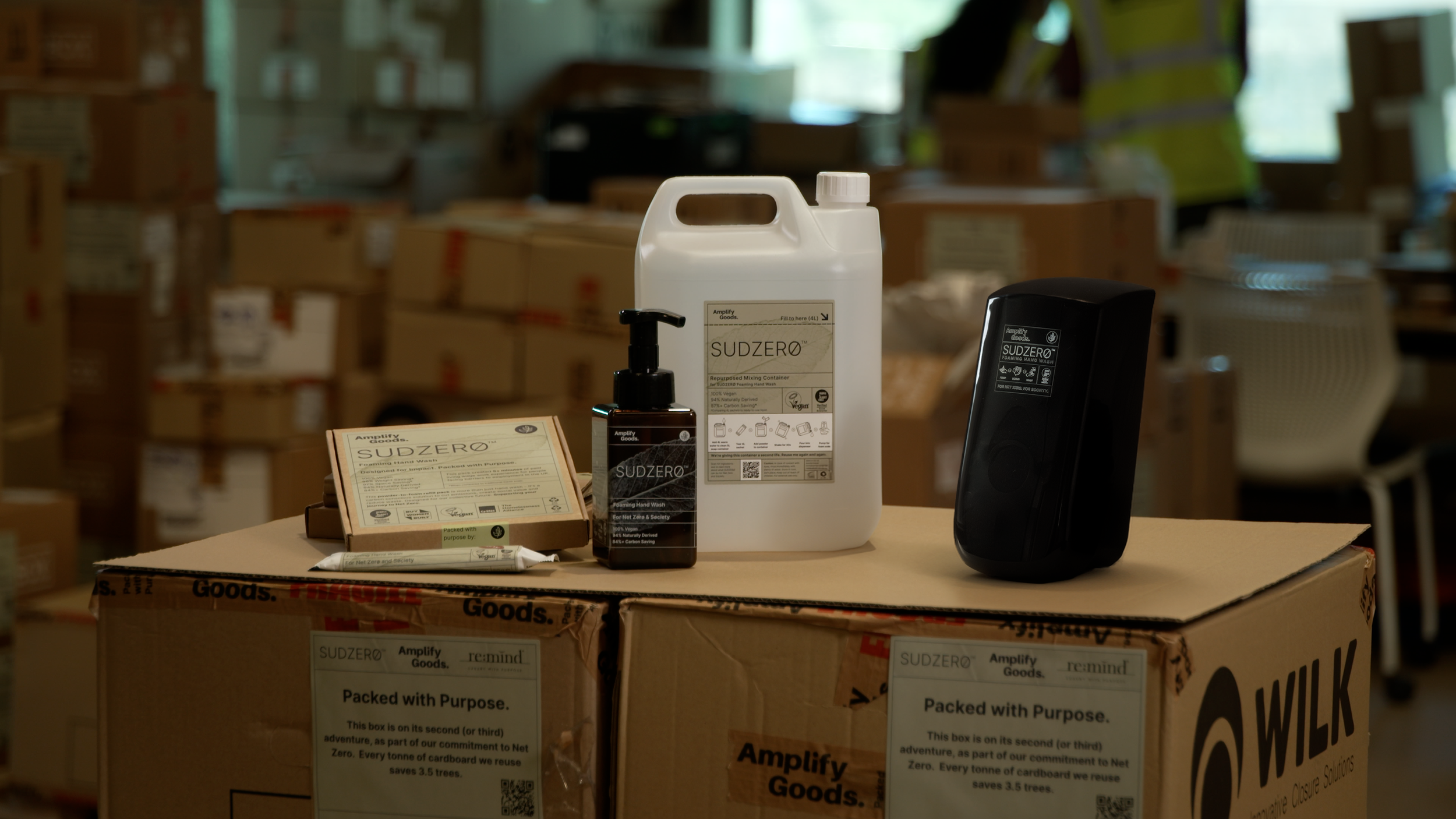
Liquid soap is, quite literally, mostly water. Shipping water is expensive in carbon terms: it adds weight, it adds volume, and it adds freight emissions before a single hand has been washed. That's the starting insight behind SUDZERO, our powder-to-foam handwash, and it's the reason the carbon savings are as significant as they are.
Backed by two independent Life Cycle Assessments conducted with Devera, SUDZERO delivers carbon savings of 84%+ (12x350ml pack) and 87%+ (5x4L refill pack) compared to ready-to-use liquid soap, calculated across the full lifecycle: raw materials, manufacturing, transport, use, and end-of-life. The lever isn't a single clever ingredient. It's transport weight and volume: SUDZERO is 98% lighter and 97% smaller than the equivalent bulk liquid soap, which is the single biggest driver of the carbon saving.
For a facilities or procurement team working through a Scope 3 reduction target, that makes washroom hygiene one of the more tractable categories to act on, precisely because the underlying cause (shipped water) is so straightforward to remove. A few practical starting points:
Ask suppliers whether their carbon claims are backed by an independent, full-lifecycle LCA, not just a single-ingredient or single-stage estimate
Look at product weight and volume per use, not just per litre, since freight emissions scale with what's physically being moved
Check what happens at end of life. Home-compostable, microplastic-free packaging removes a downstream emissions and waste liability that liquid soap in single-use plastic doesn't
Use a supplier's own impact calculator (we publish ours at amplifygoods.org/impact) to model the Scope 3 reduction against your actual volumes, rather than working from headline percentages alone
None of this requires a wholesale procurement overhaul. It requires treating a routine, low-attention purchase category with the same scrutiny you'd give a bigger one, because the emissions reduction available is proportionally much larger than the spend.